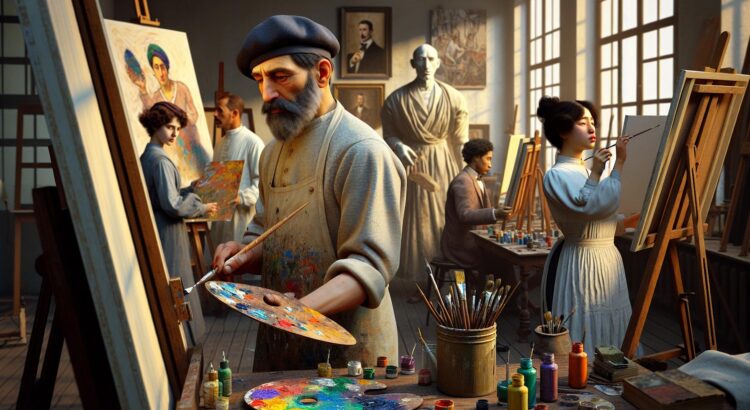
The early 20th century marked a revolutionary period in art history, where traditional forms gave way to bold new expressions of creativity. As society underwent rapid industrial, economic, and cultural transformations, artists responded by breaking free from conventional artistic boundaries and exploring innovative ways to represent reality.
We’ve witnessed how this transformative era gave birth to several groundbreaking movements, including Cubism, Fauvism, Expressionism, and Surrealism. These movements didn’t simply emerge in isolation – they represented the artistic community’s response to the profound societal changes shaping modern civilization. While these styles didn’t always fit neatly into specific timeframes, they collectively redefined how we perceive and create art, laying the foundation for contemporary artistic expression that we still see today.
The Birth of Modern Art Movements
Early 20th century art movements emerged as a response to rapid industrialization urban growth social change between 1900-1935. This transformative period introduced revolutionary artistic approaches such as:
- Fauvism (1905-1908)
Marked by intense colors unnatural forms vibrant brushwork in paintings like Matisse’s “Woman with a Hat” - Cubism (1907-1914)
Characterized by geometric shapes fragmented forms multiple viewpoints in representing three-dimensional objects - Futurism (1909-1914)
Emphasized speed technology industrial progress through dynamic compositions abstract forms - Constructivism (1913-1932)
Focused on industrial materials geometric abstraction functional design principles
| Movement | Year | Key Characteristics |
|---|---|---|
| Fauvism | 1905-1908 | Bold colors expressive brushwork |
| Cubism | 1907-1914 | Geometric forms multiple perspectives |
| Futurism | 1909-1914 | Movement technology speed |
| Constructivism | 1913-1932 | Industrial materials functionality |
These artistic movements rejected traditional representation techniques favored:
- Abstract forms over realistic depiction
- Bold experimentation with color shape
- New perspectives on visual representation
- Integration of modern industrial elements
Each movement contributed distinct visual languages techniques that shaped modern art’s development. Artists explored unconventional methods materials to express their interpretation of rapidly changing modern life.
Fauvism and Expressionism in Europe

The early 20th century art movement witnessed two revolutionary artistic expressions that emerged simultaneously in France and Germany. These movements challenged traditional artistic conventions through bold color choices and emotional intensity.
The Wild Fauves of France
Fauvism emerged in France between 1904-1908, led by Henri Matisse and André Derain. The movement earned its name “les Fauves” (the wild beasts) due to its radical approach to color and form. Notable characteristics include:
- Employs vivid non-naturalistic colors
- Features bold brushwork with simplified forms
- Emphasizes painterly qualities over realistic representation
- Uses pure color straight from paint tubes
- Creates emotional impact through color contrasts
Key Fauvist artists and their contributions:
| Artist | Nationality | Notable Contribution |
|---|---|---|
| Henri Matisse | French | Movement leader, pioneered expressive color use |
| André Derain | French | Created landmark colorful cityscapes |
| Georges Braque | French | Early Fauvist before transitioning to Cubism |
| Maurice de Vlaminck | French | Known for intense color application |
German Expressionist Movement
German Expressionism developed as a distinct artistic voice in the early 1900s, emphasizing emotional experience over physical reality. The movement’s characteristics include:
- Distorts forms for emotional effect
- Uses angular shapes and harsh lines
- Incorporates dark themes and psychological content
- Reflects social unrest and cultural anxiety
- Features intense color palettes
The movement manifested in various artistic forms:
| Medium | Notable Features |
|---|---|
| Painting | Subjective perspectives, emotional intensity |
| Theater | Abstract sets, exaggerated performances |
| Film | High contrast lighting, distorted angles |
| Architecture | Dynamic forms, bold geometric shapes |
The movement flourished particularly in Berlin during the Weimar Republic period, producing works that captured the era’s psychological intensity and social turbulence.
The Revolutionary Rise of Cubism

Cubism emerged as a groundbreaking early 20th century art movement that transformed traditional artistic representation through geometric abstraction. This revolutionary approach analyzed objects from multiple viewpoints simultaneously, breaking conventional perspectives in both painting and sculpture.
Analytical and Synthetic Phases
Analytical Cubism (1908-1912) focused on deconstructing objects into geometric shapes using monochromatic palettes of browns blacks and grays. Artists broke down forms into distinct planes creating fragmented compositions that emphasized structure over color.
Synthetic Cubism (1912-1914) introduced:
- Brighter color schemes replacing earlier muted tones
- Collage elements including newspapers fabrics wallpaper
- Flatter more decorative compositions
- Simplified geometric forms with clearer outlines
| Phase | Years | Key Characteristics | Color Palette |
|---|---|---|---|
| Analytical | 1908-1912 | Fragmented forms complex planes | Monochromatic browns grays |
| Synthetic | 1912-1914 | Collage simplified shapes | Bright vibrant colors |
Impact on Modern Sculpture
Cubist principles revolutionized sculptural practices through:
- Multiple viewpoint representation in three-dimensional space
- Geometric fragmentation of organic forms
- Integration of negative space as an active element
- Abstract interpretations of human figures objects
- Emphasis on constructed rather than carved forms
- Relief constructions combining painting sculpture
- Assemblages using mixed materials
- Open form sculptures with intersecting planes
- Abstract geometric compositions in metal wood
Futurism and Machine Age Aesthetics

Futurism emerged as a significant early 20th century art movement in Milan, celebrating the dynamic energy of modern technology and industrial progress. The movement’s artists employed Cubist-inspired techniques to depict objects and figures in multiple simultaneous states, creating a sense of motion and energy in their works.
Artistic Innovation and Technique
Futurist painters developed distinctive methods to capture movement and speed:
- Divisionism technique breaking light and color into stippled dots and stripes
- Multiple viewpoint representation showing objects in various positions simultaneously
- Integration of Cubist principles to analyze energy and express dynamism
- Fragmented forms creating shattered yet animated visual effects
Notable Works and Artists
Key Futurist artworks demonstrate the movement’s core principles:
| Artist | Artwork | Year |
|---|---|---|
| Umberto Boccioni | Unique Forms of Continuity in Space | 1913 |
| Giacomo Balla | Dynamism of a Dog on a Leash | 1912 |
| Carlo Carra | Funeral of the Anarchist Galli | 1911 |
| Gino Severini | Dynamic Hieroglyphic of the Bal Tabarin | 1912 |
Technological Themes
The movement celebrated modern industrial elements:
- Speed and motion in mechanical objects
- Urban development and city landscapes
- Industrial machinery and transportation
- Dynamic energy of modern life
- Technological advancement and innovation
The movement’s emphasis on technology and speed reflected Italy’s rapid industrialization during this period. Futurist artists portrayed mechanical subjects through fragmented forms, creating visual representations of movement and energy that captured the essence of the machine age.
The Dada Revolution

Dada emerged as a revolutionary anti-art movement during World War I in Zurich, challenging traditional artistic values through deliberate irrationality and rejection of societal norms. This radical movement spread across Europe and the United States, fundamentally altering the early 20th century art landscape.
Birth of Anti-Art Movement
Dada developed as a direct response to the capitalist and nationalistic climate of World War I. The movement rejected conventional artistic standards by producing anti-art cultural works that embraced chaos and irrationality. Dadaists focused on creating nonsensical artworks that mocked bourgeois values through:
- Automatic creation processes
- Found object sculptures
- Abstract poetry performances
- Random word assemblages
- Provocative manifestos
Key Artists and Works
The Dada movement attracted numerous influential artists who pioneered revolutionary techniques:
- Marcel Duchamp: Created “readymades” by transforming everyday objects into art pieces
- Man Ray: Developed innovative photography techniques combining found objects
- Hans Arp: Produced abstract collages using chance arrangements
- Hannah Höch: Pioneered photomontage techniques in political art
- Tristan Tzara: Composed poetry using random word selections
Notable works include:
| Artist | Artwork | Year |
|---|---|---|
| Marcel Duchamp | Fountain | 1917 |
| Man Ray | The Gift | 1921 |
| Hannah Höch | Cut with the Kitchen Knife | 1919 |
- Found object sculptures
- Photomontage compositions
- Automatic writing methods
- Abstract sound poetry
- Multi-media performances
Surrealism’s Dream-Like Vision
Surrealism emerged as a significant early 20th century art movement that explored the realm of unconscious thoughts through puzzling imagery and contradictory arrangements. This artistic movement challenged traditional perception by creating works meant to fascinate rather than be clearly understood.
Automatic Drawing and Painting
Surrealist painters developed distinctive techniques to access subconscious creativity through automatic drawing and painting. Notable artists like Salvador Dalí created iconic works such as “The Persistence of Memory” and “Swans Reflecting Elephants” using dreamlike imagery and unexpected juxtapositions. Joan Miró’s “Dog Barking at the Moon” and René Magritte’s “The Treachery of Images” exemplified the movement’s focus on confusing titles and reality-based subjects arranged in unusual ways.
Surrealist Sculpture
Surrealist sculpture expanded traditional definitions of three-dimensional art through experimental techniques and unconventional materials. The movement introduced innovative methods such as:
- Coulage: An automatic sculpture technique created by pouring molten materials into cold water
- Involuntary sculpture: Objects formed through absent-minded manipulation of everyday items
- Found object assemblages: Combinations of unrelated items to create puzzling compositions
Alexander Calder’s “Lobster Trap and Fish Tail” demonstrated how Surrealist sculptors transformed common objects into dreamlike forms. The movement’s sculptural works emphasized random formation and unconscious creation, challenging established artistic conventions through their innovative approaches to three-dimensional expression.
| Notable Surrealist Artists | Representative Works |
|---|---|
| Salvador Dalí | The Persistence of Memory, Metamorphosis of Narcissus |
| Joan Miró | Dog Barking at the Moon, The Tilled Field |
| René Magritte | Time Transfixed, The Son of Man |
| Frida Kahlo | The Two Fridas, The Little Deer |
| Alexander Calder | Lobster Trap and Fish Tail |
Abstract Art Takes Shape
The early 20th century art movement witnessed a radical departure from traditional representation toward pure abstraction. Artists explored new ways of expressing visual elements through non-representational forms focusing on color shape emotions.
From Representation to Abstraction
Abstract Expressionism emerged as a powerful force characterized by intense emotional expression through non-representational art. Artists like Willem de Kooning focused on the process of creation applying thick layers of paint in bold gestural strokes. Color Field painters such as Mark Rothko created emotionally charged works using large areas of pure color while action painters developed unique techniques to express abstract concepts.
| Notable Abstract Works | Artist | Year | Location |
|---|---|---|---|
| Light Red Over Black | Mark Rothko | 1957 | Tate Modern London |
| Woman I | Willem de Kooning | 1950-52 | Museum of Modern Art NYC |
Constructivism and Suprematism
Constructivism originated in Russia in 1919 rejecting autonomous art in favor of socially purposeful creation. The movement utilized geometric designs bright colors industrial materials focusing on functional aspects of art. Suprematism led by Kazimir Malevich emphasized pure feeling through simple geometric shapes placed on white backgrounds. Notable Suprematist works featured limited color palettes arranged in thoughtful compositions emphasizing non-objective reality over representation.
| Key Suprematist Works | Features |
|---|---|
| Suprematist Composition | Geometric shapes diagonal placement |
| White on White | Minimal color pure abstraction |
| Black Square | Iconic geometric abstraction |
| Black Circle | Essential form exploration |
Conclusion
The artistic revolution of the early 20th century stands as one of the most transformative periods in creative history. We’ve seen how these groundbreaking movements fundamentally changed our understanding of what art could be and do.
The legacy of these movements continues to influence contemporary artists today. From Cubism’s geometric innovation to Surrealism’s exploration of the subconscious we can trace modern artistic expression directly back to these pioneering movements.
As we reflect on this era it’s clear that these artists didn’t just create new styles – they redefined the very purpose of art itself. Their courage to break from tradition and embrace radical new forms of expression has forever changed how we perceive and create art.